Underground Infrastructure 101: How Joint Trenching & Directional Boring Save Time and Budget on Roseville Commercial Developments
June 7, 2026 9:12 pm Leave your thoughtsCommercial development in Roseville is booming. From new retail corridors along Baseline Road to mixed-use projects near the Galleria, builders and property owners are racing to break ground and deliver finished spaces on schedule. But beneath all that ambition lies a challenge that too many developers underestimate until it becomes expensive: getting utilities underground efficiently, without blowing the budget or the timeline.
That is where joint trenching and directional boring come in. These two underground installation methods have quietly become essential tools for any experienced underground utility contractor in Roseville, and understanding how they work can help you make smarter decisions long before the first shovel hits the dirt.
What Joint Trenching Actually Means for Your Project
Joint trenching is exactly what the name suggests. Instead of digging separate trenches for each utility line, gas, electric, telecom, water, and conduit, contractors open a single trench and install multiple utility systems at once. The ground gets opened one time, multiple services go in, and the trench gets backfilled and restored in a single operation.
For commercial developments in Roseville, this approach delivers compounding savings. The cost of trenching is not just about the machine doing the digging. It includes traffic control, permitting, inspection fees, restoration of pavement or landscaping, and labor hours spread across multiple trades. When you eliminate redundant trench runs by combining them into one coordinated pull, every one of those cost categories shrinks.
Coordination is the key ingredient. Joint trenching requires careful pre-construction planning to ensure that utility spacing requirements are met, that each service has the correct depth and separation from adjacent lines, and that the installation sequence does not create conflicts down the road. Experienced underground utility contractors in Roseville who have worked through the City of Roseville permitting process understand how to sequence these installations so that inspections pass cleanly and the project keeps moving.
Why Directional Boring Changes the Game in Developed Areas
Directional boring, also called horizontal directional drilling (HDD), solves a completely different problem. Open-cut trenching works well in undeveloped ground, but in an already-developed commercial zone, you are frequently dealing with existing pavement, landscaping, curbs, driveways, and structures that nobody wants to tear up and replace.
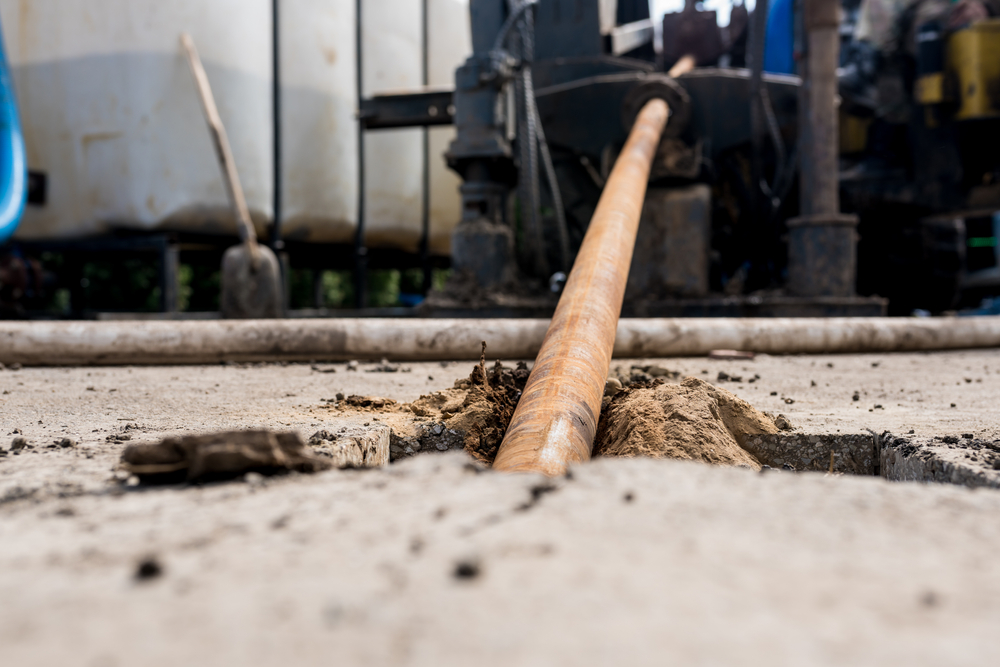
HDD uses a guided drill that enters the ground at an angle, travels horizontally underground, and exits at the intended endpoint. A conduit or pipe is then pulled back through the bored path. The surface above stays largely intact.
This matters enormously for Roseville commercial projects in established corridors. If you need to run conduit from a utility vault across a parking lot, under an access road, or beneath a concrete pad without excavating the entire path, directional boring makes that possible at a fraction of the disruption cost. Businesses stay open. Tenants are not impacted. Existing improvements are preserved.
There is also a permitting dimension to consider. Cutting through public streets in Roseville requires encroachment permits, traffic control plans, and in many cases, street restoration bonds. Directional boring under a road often avoids the need for a full-cut permit and dramatically reduces the restoration obligation. For a commercial developer on a tight schedule, that can mean weeks saved during the approval phase alone.
How These Methods Stack Up Against Traditional Open-Cut Trenching
Traditional open-cut trenching still has its place, particularly on large greenfield sites where there is minimal existing infrastructure and wide-open access. However, on infill projects, redevelopments, and sites adjacent to active commercial operations, the limitations of open-cut become apparent quickly.
Trenching through an active parking lot, for example, means relocating customers, posting signage, setting up barrier systems, and then repairing the asphalt afterward. If that lot serves a tenant who is already open for business, the friction between construction activity and daily operations can create real liability and relationship issues for the property owner.
Joint trenching and directional boring reduce that friction significantly. Joint trenching compresses the total number of open-cut events on a site, so even where trenching is necessary, the footprint of disruption is smaller. Directional boring eliminates surface disruption entirely along the bored path.
From a pure budget standpoint, the savings can be substantial. Restoration costs for concrete flatwork, asphalt, and decorative paving in a commercial setting can run high, and those costs add up fast when multiple separate utility pulls are involved. Reducing the number of open-cut events through joint trenching, or eliminating surface cuts entirely through HDD, keeps restoration line items under control.
An experienced underground utility contractor in Roseville will be able to help you model these cost comparisons early in the design phase, before utility layouts are finalized, so that the installation method informs the design rather than the other way around.
Navigating Roseville’s Permitting and Utility Coordination Requirements
Roseville has its own set of utility providers, standards, and permitting pathways, and navigating them efficiently is a genuine skill. The City of Roseville Electric Utility, Pacific Gas and Electric, AT&T, Comcast, and various water and sewer agencies each have their own installation standards, inspection protocols, and coordination requirements.
For a commercial project that needs all of these services brought in or extended, the permitting and coordination process can easily become the long pole in the scheduling tent if it is not managed proactively. Contractors who work regularly in Roseville understand which submittals to file early, how to sequence permit applications to avoid holds, and which utility representatives to engage during the design phase rather than waiting until construction begins.
Joint trenching in particular benefits from early coordination with all utility providers involved, because each one needs to sign off on the shared trench configuration. Getting everyone to the table during pre-construction, rather than resolving conflicts in the field, is what separates projects that stay on schedule from those that accumulate costly delays.
Directional boring work under public streets or rights-of-way requires its own set of submittals, including bore logs, surface protection plans, and sometimes geotechnical data. Having a contractor who has completed this paperwork in Roseville repeatedly means fewer revision cycles and faster approvals.
Choosing the Right Underground Utility Contractor in Roseville
Not every contractor offering underground utility work has equal experience with joint trenching coordination or directional boring in a commercial context. These are specialized skills that require not only the right equipment but the project management capability to coordinate across multiple utility owners, general contractors, and municipal inspectors simultaneously.
When evaluating contractors for a Roseville commercial development, look for demonstrated experience with mixed-utility joint trench installations on commercial sites of comparable scale. Ask for specifics about how they handle utility owner coordination and what their process looks like for managing inspection hold points across multiple agencies.
For directional boring, ask about their equipment capabilities in terms of bore diameter and length, their experience with soil conditions specific to the Roseville and Sacramento foothills region, and their track record with street bore permits in Placer County and the City of Roseville.
References from general contractors and developers who have worked with them on commercial projects in the region carry more weight than general testimonials. A contractor who has successfully navigated joint trench coordination and HDD permitting in Roseville knows the terrain in both a literal and procedural sense.
The Bottom Line for Roseville Developers
Underground infrastructure rarely makes the highlight reel of a finished commercial development. Nobody takes photos of the conduit runs or posts about the utility vault on social media. But how that work gets planned and executed has a direct impact on project cost, schedule, and the long-term operability of the finished asset.
Joint trenching and directional boring are not just techniques; they are strategic tools that a skilled underground utility contractor in Roseville can deploy to compress timelines, reduce surface disruption, and keep restoration costs from eating into your contingency. Getting these decisions right in the early design phase, before layouts are locked and permits are filed, is how experienced developers protect their margins and deliver projects that finish on time.
Need an Underground Utility Contractor in Roseville, CA?
Locally owned and operated since 2000, we strive to provide fast, friendly, and efficient service to the residents of Roseville and its surrounding areas. Using an open trench method for installation, we work with communication and utility companies to get electric, water, and gas services up and running in your home or business as quickly and carefully as possible. Es7 Comm-2 U, Inc is proud to carry an ‘A+’ rating with the Better Business Bureau as a fully licensed general contractor. Call us today to ensure that your next installation project is handled with the care and professionalism that it deserves.
Categorised in: Directional Boring, Trenching Contractors
This post was written by admin